Nobody Films the Building

Hong Kong property advertising in the early 2000s was gilded. Chandeliers, gold leaf, imperial columns, a vocabulary of pure excess. The gap between what the film promised and what the buyer received grew wide enough that the government eventually legislated.
Excess wrote the law
The Residential Properties (First-hand Sales) Ordinance took full effect in April 2013. Cap 621 regulates advertisements directly. Sizes and prices may be quoted only by saleable area. Advertisements must carry a statement pointing buyers to the sales brochure. Printed advertisements must show prescribed particulars at prescribed sizes. Artist impressions require disclaimers. Misrepresentation and the dissemination of false or misleading information became criminal offences, with a maximum fine of five million dollars and seven years imprisonment.
Read that as a creative brief. Every specific claim about the actual property is a legal exposure. A coastline in another country, clearly labelled as unrelated to the development, is not. On the printed page, legal text can occupy the largest single block of the layout, and design works around it rather than the other way round.
In a good market there is nothing to film
The deeper reason is structural. When demand was strong, developments sold out off plan, years before completion. Footage of the building could not exist because the building did not. The camera went overseas by necessity, to a foreign shoreline or a studio kitchen, and an entire industry built its habits around never having a subject.
A weak market gives you one

That arrangement only holds while everything sells early. By the time our project came to market, conditions had turned. Every cooling measure had been scrapped in February 2024 and prices kept sliding regardless. Stock that would once have cleared off plan was still standing at completion, which meant selling a finished building to buyers who could walk through it. Prestige language was the wrong register, because nobody in that market felt prestigious. Our marketing and video production reached the same conclusion together. The campaign did not need more gloss. It needed novelty, and it needed energy.
After The Rain
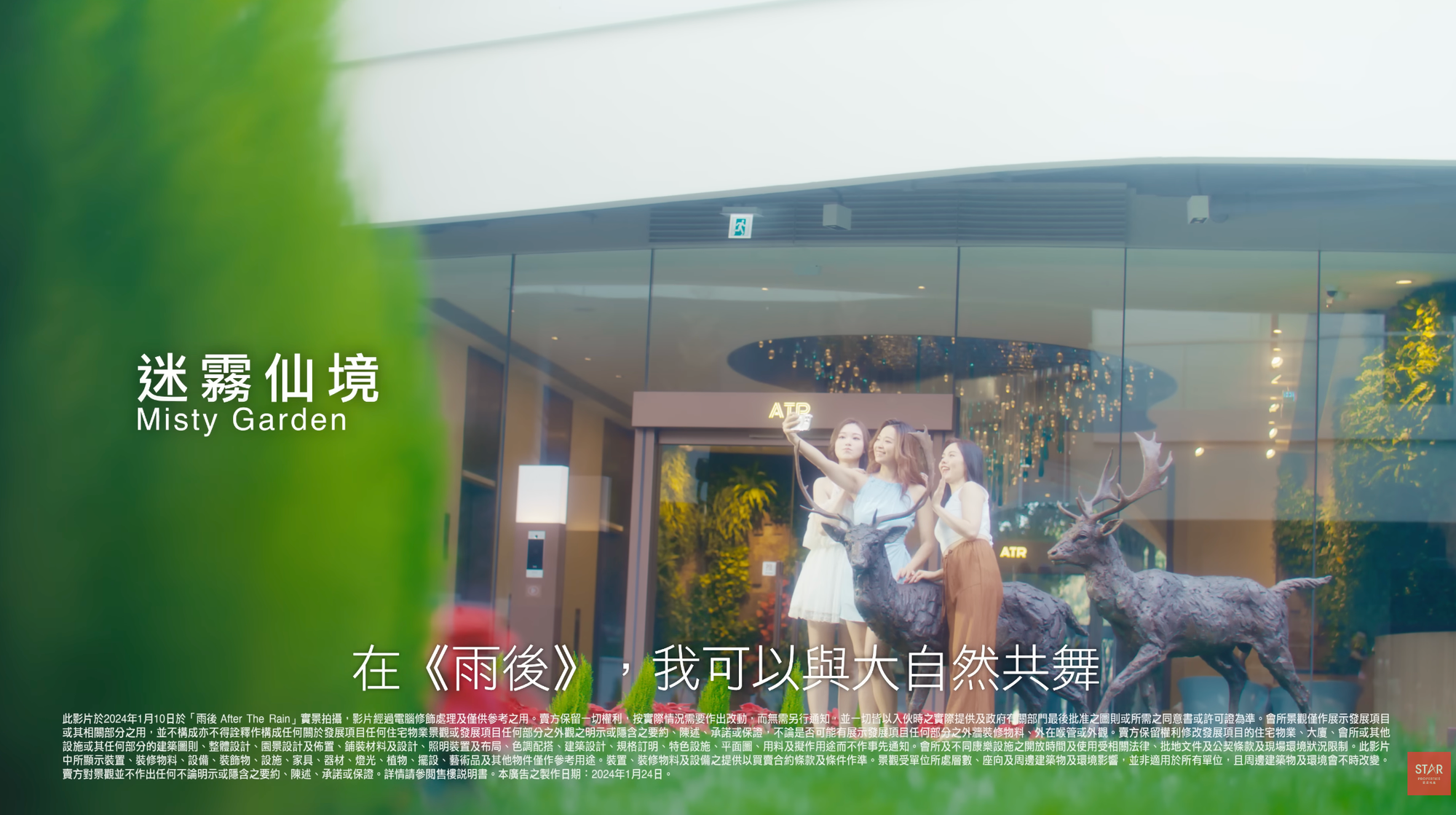
The film was made at handover, the first moment the building actually existed. It was built around three young women and ordinary daily life. Every frame was shot at the development. No overseas footage, no studio kitchen, no borrowed skyline. Occupancy rather than aspiration. Energy is difficult to fake in a place that does not exist yet, and unnecessary to fake in one that does.
The case for the rules
The ordinance was not written to make advertising dull. Before 2013 buyers were routinely quoted areas including space they could never use, and shown layouts that flattered beyond recognition. Strictness has protected a great many people, and inconvenience to graphic design is a weak argument against it. Fantasy also sells, reliably, and has for a century. A campaign shot on location only works if the building can carry it, and not every building can.
A law written to stop developers misleading buyers about the property has produced an industry that would rather not show it. The building was always the most interesting thing we had. It took a bad market before we pointed a camera at it.