The Number That Traps the Fed
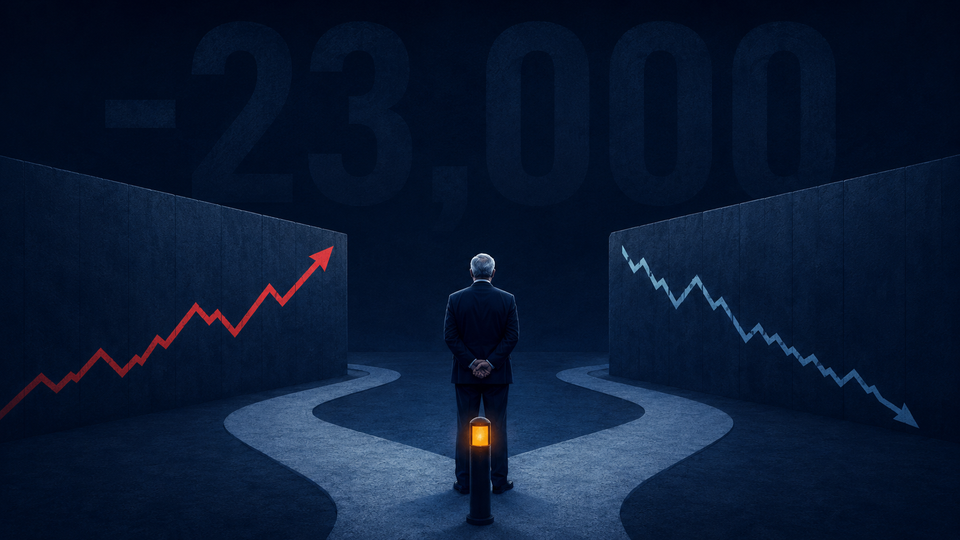
Last Friday, the US economy reported something it was not supposed to do this year. It lost jobs.
Nonfarm payrolls fell by 23,000 in July, against expectations of an 80,000 gain. Worse, the previous two months were revised down by a combined 103,000, meaning roughly half the job growth reported for May and June never actually happened. The labour market is not cooling. It has quietly stopped growing.
The Headline Is Lying to You
The unemployment rate actually fell, to 4.1%. That sounds reassuring until you read why. It fell because more than a million people have left the labour force this year. Fewer people working, fewer people looking, a shrinking denominator dressing up a weakening numerator.
Wage growth tells the same story. Average hourly earnings rose by two cents in July. The annual pace slipped to 3.2%, the slowest since May 2021. Workers have lost their bargaining power, which only happens when the demand for labour is genuinely fading.
The Trap
Here is what makes this moment remarkable. A week before this report, the Fed voted 9-3 to hold rates, and several officials were openly arguing for a hike as soon as September, because oil-driven inflation still sits well above the 2% target.
Now consider the Fed's position. Raise rates to fight inflation, and it accelerates a labour market that is already contracting. Cut rates to rescue jobs, and it pours fuel on an inflation problem that higher rates cannot fix anyway, because the source is geopolitical oil supply, not demand.
Every central banker's nightmare has a name: stagflation. Falling employment and rising prices at the same time, where each cure worsens the other disease. The July report moved that word from theory to the table.
The Market Already Voted
Watch what moved on Friday. Gold jumped to a seven-week high within hours of the release. Not stocks, not bonds. Gold.
That reaction is worth understanding. In a normal slowdown, bad jobs data lifts bonds because rate cuts are coming. In a stagflation setup, bonds are trapped alongside the Fed, so capital reaches for the one asset that answers to neither employment data nor interest rate policy. The metal that cannot be printed rallies precisely when the people doing the printing run out of good options.
To Be Fair
One report is not a trend. Payroll data gets revised, sometimes heavily, as this very report proved. The private sector still added 30,000 jobs, and the weakness was concentrated in government and retail. A September rebound is entirely possible, and the Fed has seen false alarms before.
But the revisions cut the other way too. If May and June were overstated by 103,000, the recent past was weaker than anyone believed at the time. The benefit of the doubt is running thin.
What It Means for Hong Kong
Hong Kong imports every twist of this dilemma through the currency peg. If the Fed holds or hikes into a weakening economy, our rates stay punishing for longer, and the property market's test of the bottom runs deeper into 2027. If the Fed blinks and cuts while inflation is still hot, the debasement path I wrote about last month begins earlier than expected.
Either way, the July jobs report just made the next six months more interesting, and more dangerous, than the calm summer suggested.
Minus 23,000 is a small number. What it traps is not.