The 10:30 Train to Kinosaki
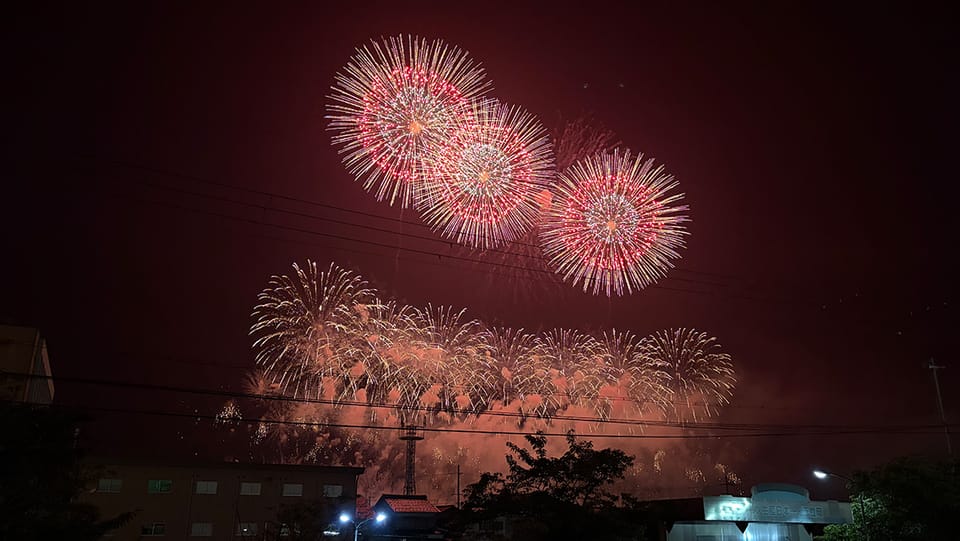
The last firework over Toyooka went off around ten at night. Thirty minutes later, on the station platform, I saw the city's real problem. The crowd was not leaving. It was running. Running for the 10:30 train to Kinosaki Onsen. Thousands came for the fireworks, and the moment they ended, people ran out of the city.
One city hosts. The neighbour gets paid.
Toyooka does the work. Kinosaki takes the money. I watched it happen.
Central Toyooka was mostly shut by night. The festival stalls sold the same few things. There was atmosphere, but nothing behind it. I booked my hotel a week before the event, and only one hotel for miles had a room left. It was not a good one. The problem was not the size of the crowd. Even a crowd of thousands was more than the city could hold. Not enough beds, nothing to do after dark, no reason to stay.
One train stop away, Kinosaki has a hot spring street, yukata, seven public baths, shops open late. It gives visitors a reason for a second night. I went there afterwards and saw it for myself. The fireworks light up Toyooka's sky. The spending lands in Kinosaki's tills.
Hong Kong is running the same experiment
Kai Tak is Toyooka at scale. Since opening, the sports park has hosted over ninety events and drawn more than seven million visitors. One concert sold out in three minutes. The crowds are real.
Now follow the money. Hong Kong received 49.9 million visitors last year, about three quarters of the 2018 level. But total visitor spending was HK$197.5 billion, down 44% from HK$353 billion in 2018. Spending per overnight visitor fell from HK$6,614 to HK$5,503. The people came back three quarters of the way. The money came back little more than half.
One more number, from the same Legislative Council research. Hong Kong residents spent HK$191.1 billion travelling abroad last year, 10% more than in 2018. Money in: HK$197.5 billion. Money out: HK$191.1 billion. Hong Kong tourism is close to net zero. The problem mega events must fix is not that visitors stopped coming. It is this balance.
Hong Kong has its own 10:30 train
The average overnight stay got shorter last year, down 0.1 night. The official explanation is honest: travel between Hong Kong and mainland cities is now very convenient. In plain words, many visitors sleep in Shenzhen, come over for the day, and go back at night, because hotels and dinner cost less there.
When a Kai Tak show ends and the crowd pours toward the MTR and the border, it is the same photo as that platform in Toyooka. Kai Tak is Toyooka. Shenzhen is Kinosaki. And a Kai Tak night is fifty thousand people, not a few thousand.
To be fair
There is real progress. The mall next to the sports park saw footfall and business rise 40% in the first quarter, built on a "ticket stub economy": show a same-day ticket, get dining and shopping deals. Merchants report 20 to 30% more business during big events. Sales in Kowloon City and To Kwa Wan rose 27% in the first four months of the year. Hotel rates are recovering, and some owners have paused plans to turn hotels into student housing.
But look at what the ticket stub extends: hours, not nights. It turns "leave right after the show" into "leave after dinner." That is zero to one. From one night to two is a different fight.
Toyooka has not won that fight yet. Hong Kong is just getting started. The scorecard for a mega-event economy is not the number of tickets. It is the second night.